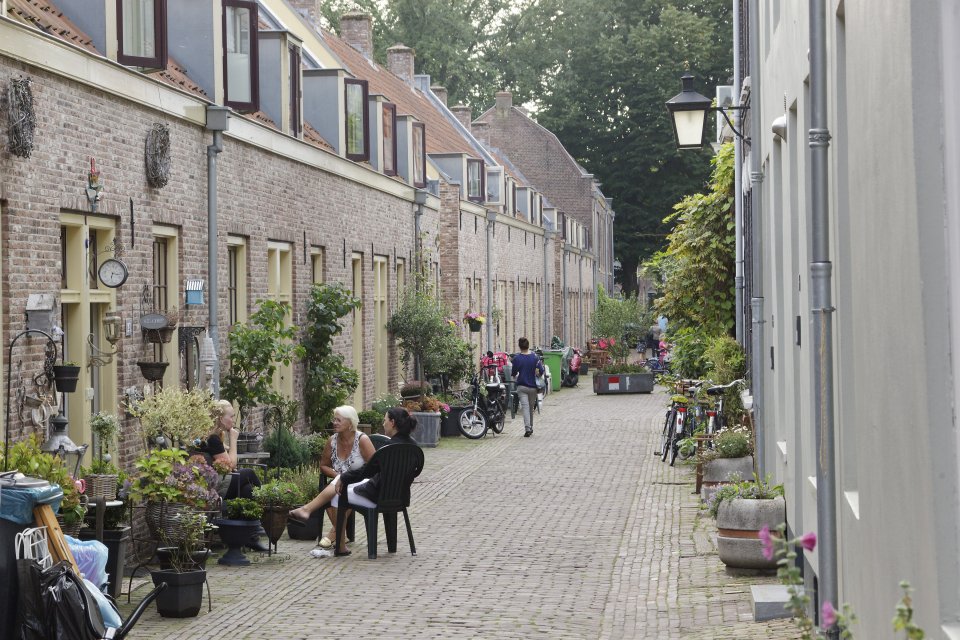
The Seven Alleys
The Seven Alleys (De Zeven Steegjes) are one of the last remaining historic working-class neighbourhoods in Utrecht's city centre. Tucked away between the Oudegracht, Pelmolenweg, the Geertekerk and the former Martinus Church, this charming area is known for its tiny workers' houses and maze of narrow alleys and passageways.
History
The simple workers' houses in the Seven Alleys were built between 1843 and 1860 on land behind the former De Boog brewery on the Oudegracht, close to a cigar factory and a sugar refinery.
As Utrecht's population grew and concerns about diseases such as cholera increased, the government introduced stricter regulations for new housing developments. Dead-end slums were no longer allowed, new streets had to be straight, and enough space was required to allow fresh air to circulate. Although the houses had no private kitchens or toilets—the residents shared outdoor toilet facilities—they were considered remarkably modern for their time.
The small houses were built for large Roman Catholic families, many of whom relied on charity, as well as for employees of the nearby factories. The neighbourhood was divided into a socialist and a Catholic section, with the latter closely watched by the church.
Although the factories have long since disappeared, the Seven Alleys remain one of the last authentic working-class neighbourhoods in Utrecht's historic centre. The area was carefully restored in the 1990s, while preserving its intimate atmosphere and unique character.
Address
Boogstraat 0
3511 XV Utrecht
